
– On the Land –
FROM FOREST TO FRONT DOOR
How to create a foraged wreath from the WNC landscape
***
The best place to start foraging is in your own yard. Pine boughs and cones, holly leaves and berries, and Leyland cypress greenery bring the spirit of tradition to the holidays. Items such as dried hydrangea flowers, boxwood greenery and dried giant foxtail grass, with its delicate, wheat-like stalk topped with a soft, bristly seed head, can all add a rustic feel to your holiday wreath or decor.
For a more personal wreath, incorporate natural items gathered throughout the year. Do you have pine cones from a summer camping trip? How about magnolia leaves from your grandmother’s backyard? Maybe a favorite wildflower you’ve spotted? Dry them properly and include them in your holiday wreath.
Leftover dried gourds from the garden, a bluejay feather you found and dried herbs like thyme, rosemary or lavender make excellent colorful additions. Dried okra pods from your summer garden can add a rustic texture, and keeping the heirloom seeds lets you plant again next year.
Edible products, meanwhile, such as dried apple rings from apples gathered at a local orchard, can add scent and texture to your wreath. (Take note, however, that edible additions should not be placed outdoors; dangerous and unwanted wildlife may see them as a food source.)
More than just a craft project, your wreath can act as a reminder of the year’s activities and special times. Keep a journal of your creations by taking a photograph of each year’s wreath and writing a short note about where each embellishment came from. Year after year, create a wreath with new items and fill the journal with memories made from Western North Carolina’s landscape.
When gathering natural products, it’s important to practice responsible foraging. Make sure to identify the plants, while being mindful of local laws and your own safety. State or national parks may require permits or have other restrictions in place.
Similarly, steer clear of rare, endangered or otherwise protected plant species. Consider allergies, both yours and others’, before handling any plants. When foraging live plants and trees, you are essentially pruning them. Using proper pruning cuts and techniques, remove only what you need to minimize damage to the plant and environment.
To assemble your wreath, use grapevines and tendrils or a metal ring as a base. Create bundles of your foraged items, cinching them together with wire or biodegradable jute twine.
Work your way around the base, wiring each bundle into place and filling in any gaps. Attach smaller embellishments by tucking them through wire or cinching them with jute twine. Tuck in any loose ends for a neat, finished appearance.
As fresh greens dry out, they can be replaced as necessary. That keeps things looking fresh and reduces fire safety concerns, which can also be minimized by avoiding heat sources and open flames.
When the holiday season comes to an end, your wreath’s story can continue! After removing any non-biodegradable or invasive items, and storing wires and metal forms for next year’s use, you can compost your wreath or scatter it in your yard as an offering to birds and insects. Giving it back to the land from which it came is a great way to complete the cycle and remind us of the connection we feel to the Western North Carolina landscape.

More than just a craft project, your wreath can act as a reminder of the year’s activities and special times.
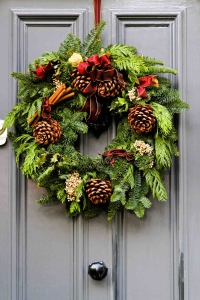
When foraging for your holiday wreath, look for pine boughs and cones, holly leaves and berries, and Leyland cypress greenery.