
– On the Land –
DEEP ROOTS
How Asheville started the science of sustainable forests
BY ADAM COULTER
***
Oak, hickory, maple and poplar, along with the beautiful Red Spruce and Fraser Fir at higher elevations. All of them move from winter rest to spring renewal, offering a bit of cool shade during the summer and then swoon-worthy explosions of color in the fall.These forests thrive with life because of practices put in place to preserve them and maintain their health; they’re not here by accident. And the idea that forests had to be maintained—with plans in place to minimize the impacts of wildfires, pests and diseases while promoting animal and plant diversity—started in Asheville. That’s why the city is known as the birthplace of forestry management.
In many ways, the science of forestry management started with George Vanderbilt, the New York native who would move to Asheville and build the country’s largest private residence, the Biltmore Estate. Legend has it that while vacationing at the Battery Park Hotel in downtown Asheville in 1888, the 26-year-old heir to the Vanderbilt railroad and shipping fortune was so enamored with the surrounding landscape that he vowed to one day own all of it within sight.
He began acquiring land in 1890 and making plans for his country estate that would eventually encompass 125,000 acres. While his vision was grand, the land itself was wounded. Much of the land he purchased was not the lush scenery visitors admire today, but a mosaic of severely depleted woodland and overworked agricultural land.
To help build his mountain estate, he hired one of the most renowned landscape architects of the time—Frederick Law Olmsted, designer of New York’s Central Park, among others—and soon laid plans for the restoration of the damaged landscape.
Following Olmsted’s advice of maintaining the forests for the benefit of the land and landowner alike, Vanderbilt hired a young, professionally trained forester, Gifford Pinchot. Pinchot, an 1889 Yale University graduate, worked his first professional forestry position at the Biltmore Estate from 1892 until 1895.
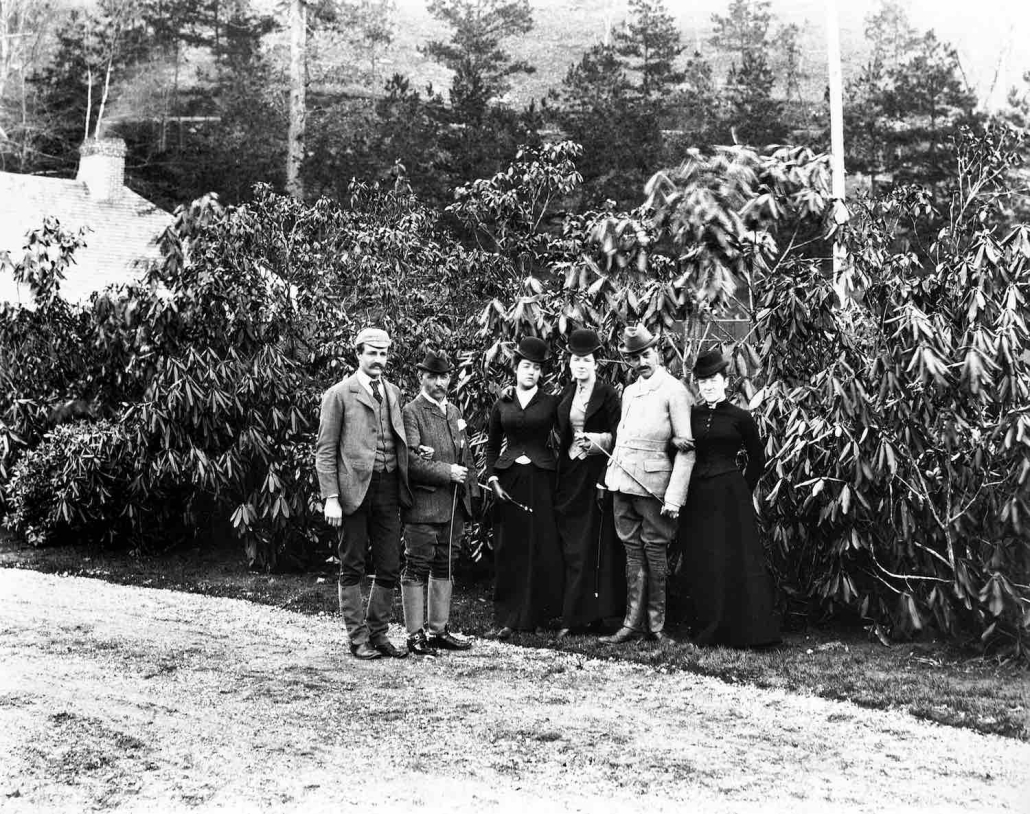
George Vanderbilt (second from right) posing with friends, including Gifford Pinchot (left).
Looking to make his mark on the science of forestry in America, Pinchot emphasized that proper forest management would sustain the forest while also producing an economic profit from timber products. His plan for the Biltmore Estate became the first documented sustainable forest management plan in the United States.
Needing help with the hands-on work, Pinchot enlisted German forester Carl Schenck. While his first years saw more hard-won lessons than triumphs, Schenck successfully introduced nursery-grown seedlings for reforestation and supplied regional customers with Biltmore lumber.
His constant presence in the forests soon drew interest from local young men eager to learn his techniques. In September 1898, Schenck established the Biltmore Forest School, the nation’s first forestry school.
With tuition set at $200 a year, students lived in makeshift cabins and learned the latest techniques in logging, forest economics, and silviculture—the art of controlling the forest’s growth for health and long-term sustainable use. Sessions rotated between the Biltmore Estate (during winter) and the Pink Beds area of nearby Transylvania County—named for its prolific rhododendron blooms—during the warmer months.
The school lasted only 15 years, but the knowledge gained by the students lasted generations and brought much-needed attention to conservation and sustainable forestry as valuable endeavors.
Known today as the Cradle of Forestry in America, and open for visitors, the school’s site includes seven historical buildings, a discovery center where adults and children learn the significance and history of forestry in the United States, and paved trails with exhibits.
Vanderbilt’s vision to repair a damaged landscape laid the foundation for forest management science, which is now taught at the nation’s most prestigious universities. Our very own NC State University offers degrees in Forestry Studies, and NC Cooperative Extension’s Forestry Department assists forest owners with topics regarding forest economics, management, health, timber, wood product sales and urban and community forestry.
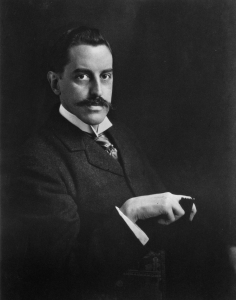
A portrait of George Vanderbilt (Courtesy of The Biltmore Co.)
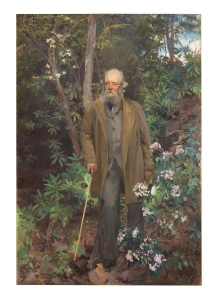
A painting of landscape architect Frederick Law Olmstead (Photo courtesy of The Biltmore Co.)